

Jun 10, 2026 Turning Your Frustration Into Forward Momentum
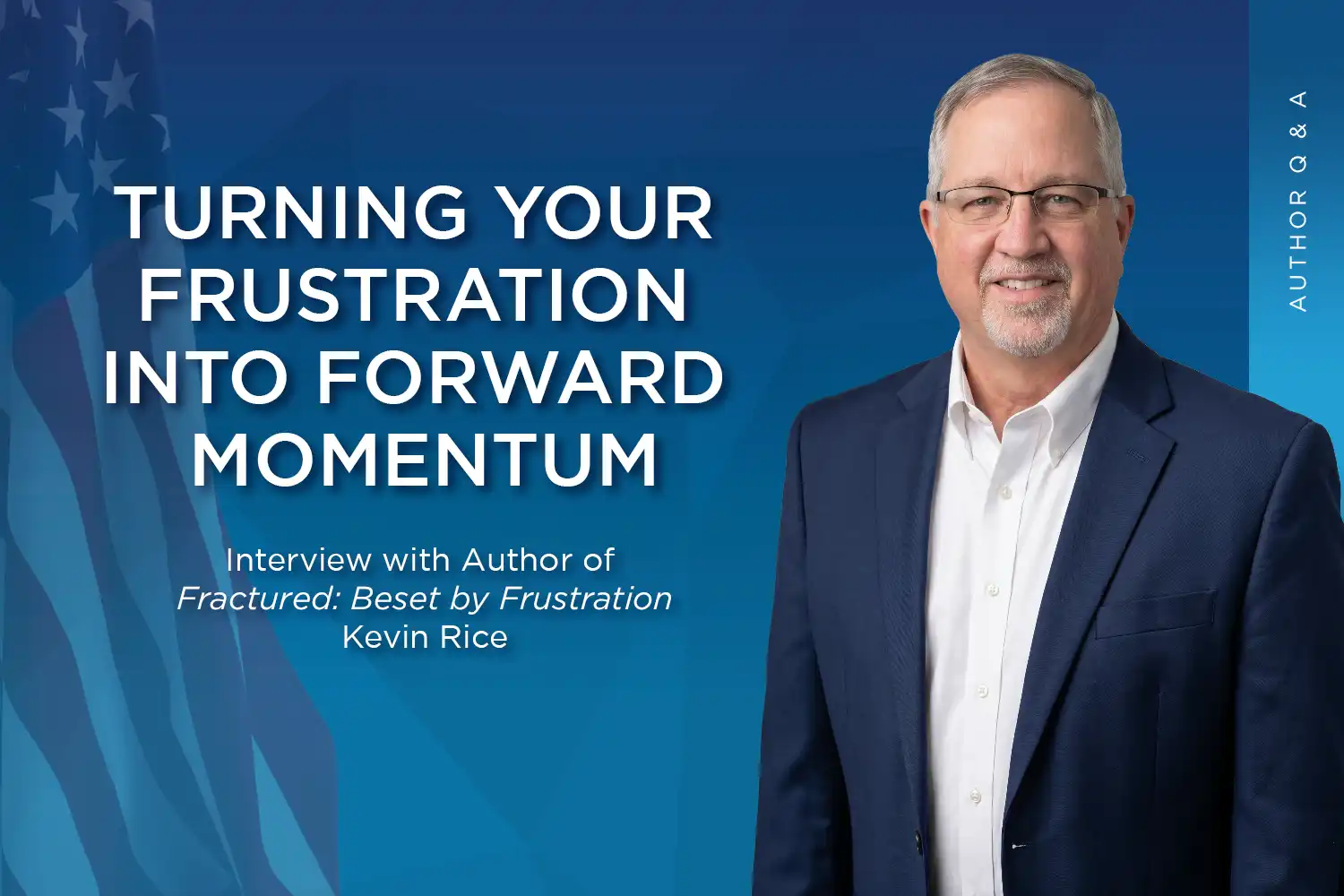
Few people have studied frustration the way Kevin Rice has — not as a concept, but as a career-long witness to what happens when it goes unaddressed.
Kevin brings more than three decades of distinguished law enforcement service to the subject, including a 23-year career with the United States Secret Service, where he retired as Special Agent in Charge of the Phoenix Field Office, overseeing operations across a two-state region. Before that, he served in managerial positions in both the Los Angeles and Little Rock Field Offices, leading complex investigations and protective operations at the highest levels of national security. A deeply committed educator, Kevin trained thousands of new federal recruits as a detailed instructor at the Federal Law Enforcement Training Center, taught criminal justice at five universities, and developed one of the nation’s first college-level courses in behavioral threat assessment.
His book, Fractured: Beset by Frustration, grew directly from that experience — particularly from watching officers allow emotion to override their training in high-stakes moments. It is both a rigorous examination of frustration’s hidden costs and a practical guide to taking back control. We sat down with Kevin to talk about what he learned, what he wrote, and why it matters for anyone who leads under pressure.
1. You had a remarkable career with the U.S. Secret Service. What are some of the most valuable leadership lessons you learned in those high-stakes protective and investigative environments?
When I present to law enforcement leaders on this subject, I always start with the fact that frustration is universal and that it can lead to poor decision making, anger, aggression and in the long term to deleterious physiological responses. One key lesson from my time in the Secret Service is that frustration, if left unchecked, narrows your focus and undermines decision-making at the worst possible moments. In high-stakes operations, emotional control isn’t optional—it’s a core competency. I learned that the ability to pause and think clearly under pressure directly impacts outcomes. That perspective fundamentally shaped how I view frustration as something to manage, not ignore.
2. Your book draws heavily from decades in law enforcement and leadership. How did your real-world experiences with stress, decision-making under pressure, and team dynamics inspire you to write Fractured?
As someone who truly believes that law enforcement is a noble profession, and someone who has been a law enforcement instructor, I found myself routinely watching dash cam or BWC videos of police officers acting outside the bounds of their training. These officers were allowing emotion to override their training. They were using the wrong parts of their brain while performing their duties. After studying dozens of these encounters I came to the realization that I was watching cops acting out of frustration. I knew I wanted to solve that problem, and hopefully save some careers and lives. I wrote Fractured for a wide audience but in the end, it is a love letter to law enforcement. My goal was to bring awareness to this hidden issue and provide a practical framework for addressing it. The final objective was to help others avoid the subtle but damaging effects of frustration that I saw repeatedly within my profession.
3. You reframe frustration not as a weakness, but as a valuable signal that something is out of alignment. What’s the most common misunderstanding people have about frustration, and why is it so dangerous when ignored?
Frustration isn’t just a momentary feeling—it’s a buildup that can alter thinking and behavior over time. When it accumulates, it often leads to impulsive decisions, strained communication, and decreased effectiveness. The danger lies in how quietly it grows beneath the surface. By the time it’s recognized, it may already have influenced critical outcomes.
4. Many people see frustration as just a minor annoyance. What makes it far more dangerous than most realize?
Many people believe they can compartmentalize frustration and still lead effectively, but that’s rarely true. Frustration subtly impacts tone, patience, and decision-making, often without the leader realizing it. It can erode trust and clarity within a team. The misunderstanding is thinking it stays internal when it actually ripples outward. In law enforcement, everyone involved in the process is frustrated: The responding officer, the citizen, the arrestee and police management. Leaders need to be aware of this fact and take it into consideration. More importantly, police leadership needs to ensure that their officers are trained to identify frustration in themselves and others and how to react accordingly.
5. You’ve developed practical tools for dealing with frustration in high-pressure jobs. Can you share one simple technique that’s especially effective?
I am a big fan of several of the “Frustration Fourteen” as listed in the book as ways to defeat frustration. But one of the most effective techniques for me to combat frustration is the technique to picture yourself when you are angry and/or frustrated. Is your face red? Are you scowling? Screaming? Are you cursing? Picture yourself in the throes of that emotion and then asking yourself, “Would I want my Mom to see me like this?” My spouse? My children? It has a way of centering you and your emotions. In many ways the ubiquitous nature of body worn cameras have reinforced this simple technique.
6. How does unresolved frustration quietly impact first responders, leaders, and professionals over time?
Over time, unresolved frustration builds into fatigue, cynicism, and reduced resilience. For first responders and professionals in high-pressure roles, it often becomes normalized and goes unaddressed. This can lead to burnout, strained relationships, and poor judgment. The long-term cost is both personal and professional.
7. Why do you believe taking strategic breaks or sabbaticals can be a game-changer for managing frustration?
In Fractured, I posit the concept of incorporating sabbaticals for law enforcement officers. Mirrored on the very successful sabbaticals in other professions (such as academia and the clergy), a strategic break (every five years or so) creates distance from the environment that fuels frustration, allowing for reset and reflection. Without that separation, people often operate in a constant state of pressure without realizing its impact. Breaks restore perspective, emotional balance, and clarity. They are not a luxury—they’re a performance necessity. Several departments across the United States have instituted various versions of a sabbatical program.
8. Your Occupation Frustration course helps people identify, confront, and conquer this emotion. What’s one key outcome you see in participants?
Frustration is a universal emotion. EVERYONE gets frustrated personally and professionally. But, with that fact in mind, we need to do a better job training the police and other professions how to recognize frustration and provide them with tools to defuse it. One of the most important outcomes is increased self-awareness. Participants begin to recognize how and when frustration affects their thinking and behavior. From there, they gain tools to manage it proactively. This leads to better communication, improved decision-making, and stronger leadership presence.
9. How has your understanding of frustration changed the way you lead and live your own life today?
I can tell you that understanding my own frustrations has made me a better friend, colleague and spouse. I understand my frustrations and I can better identify my feelings and take concrete steps to defeat this debilitating emotion. Understanding frustration has made me far more intentional in how I respond to challenges. I focus less on reacting in the moment and more on maintaining clarity under pressure. It’s improved both my leadership effectiveness and my personal interactions. Overall, it’s allowed me to operate with greater consistency and control.
10. What’s one big takeaway you hope readers get from Fractured?
The biggest takeaway is that frustration itself isn’t the issue—it’s how you manage it that matters. When left unchecked, it can quietly undermine performance and relationships. But when recognized and addressed early, it can be redirected into something productive. My hope is that readers leave empowered to take control of their response rather than being controlled by it.
Fractured: Beset by Frustration is available now — pick up your copy and start building the self-awareness that separates good leaders from great ones.
Kevin also brings this work into the classroom through two courses in the Embassy course library: Occupation Frustration I: Identifying, Confronting, and Conquering Frustration and Occupation Frustration II: The Next Level. Both are designed for professionals who want more than insight — they want tools they can put to use immediately.
Browse the full Embassy course library at EmbassyCS.com/Course-Library.
