

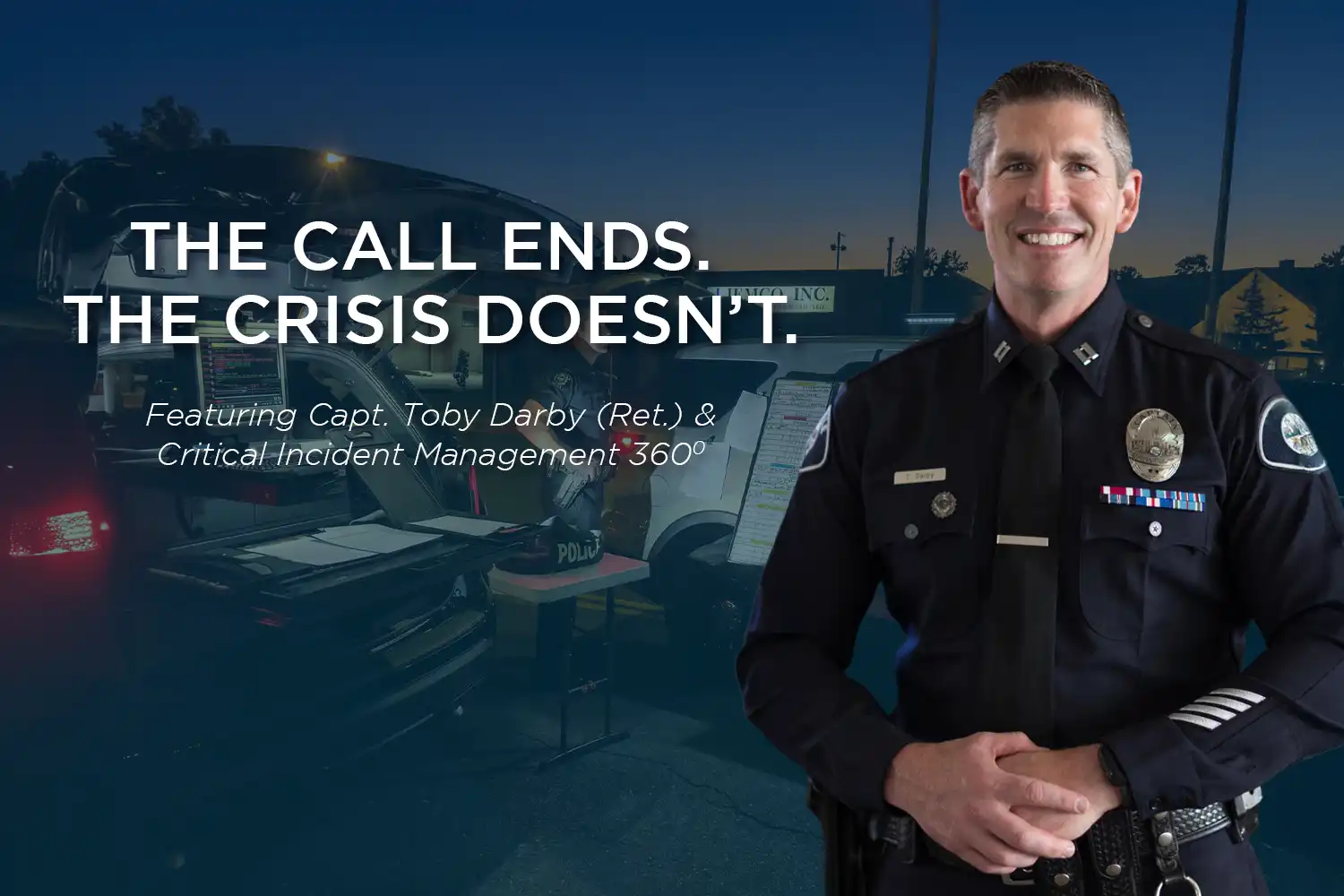
Sep 18, 2026 The Call Ends. The Crisis Doesn’t.
Most training ends when the scene goes quiet. For Capt. Toby Darby (Ret.), that’s exactly where command gets hardest — and where his Critical Incident Management 360° course begins to separate prepared leaders from improvising ones.
An active shooter. A barricade. A hostage standoff. A major crime scene. In the moment, everyone’s attention is on the response. But the response is only half the job. What follows — the line-of-duty injuries, the family notifications, the media and political pressure, the looming litigation, the toll on the officers who were there — is where a critical incident is truly won or lost. And it’s the part almost no one trains for.
That gap is what Capt. Toby Darby (Ret.) set out to close. With more than three decades in law enforcement and 19 years on SWAT, he built Embassy’s Critical Incident Management 360° around a simple, hard-earned conviction: leaders need a system for the entire arc of a crisis, from the first call to the final debrief.
When seconds count, decisions have to be a system
Ask Toby what separates leaders who hold up under pressure from those who unravel, and he doesn’t talk about instinct. He talks about structure — and about understanding why a tactic exists in the first place.
“When seconds count, decision-making isn’t instinct, it’s a system built on understanding the why. Without that, speed just turns into chaos.”
— Capt. Toby Darby (Ret.)
It’s a philosophy forged in real operations, not a lecture hall — and it shapes every hour of how he teaches.

The making of a critical-incident leader
Toby’s career reads like a tour through the highest-stakes corners of the profession. He served more than 30 years with the Glendale Police Department, retiring as a Captain, after four years as a law enforcement specialist in the U.S. Air Force. For 19 of those years he was on the department’s SWAT team, where tactical leadership isn’t a concept — it’s the difference between outcomes.
Along the way he took on the assignments most officers only read about: narcotics work with the Los Angeles Interagency Metropolitan Police Apprehension Crime Task Force and the HIDTA program, and a stint as a sergeant on the U.S. Marshals’ Regional Fugitive Task Force. He taught active shooter response tactics at a POST-approved SWAT school and became an instructor and facilitator for the California Association of Tactical Officers’ Critical Incident Leadership Course and Strategic Leadership Program — where he now also serves as a board member.
Why the “why” matters more than the tactic
Toby’s teaching keeps returning to one idea: tactics memorized without understanding don’t survive contact with real stress. Leaders don’t rise to the occasion — they fall back on what they truly understand.
“If you don’t understand the why behind your tactics, you’ll abandon them the moment stress hits.”
— Capt. Toby Darby (Ret.)
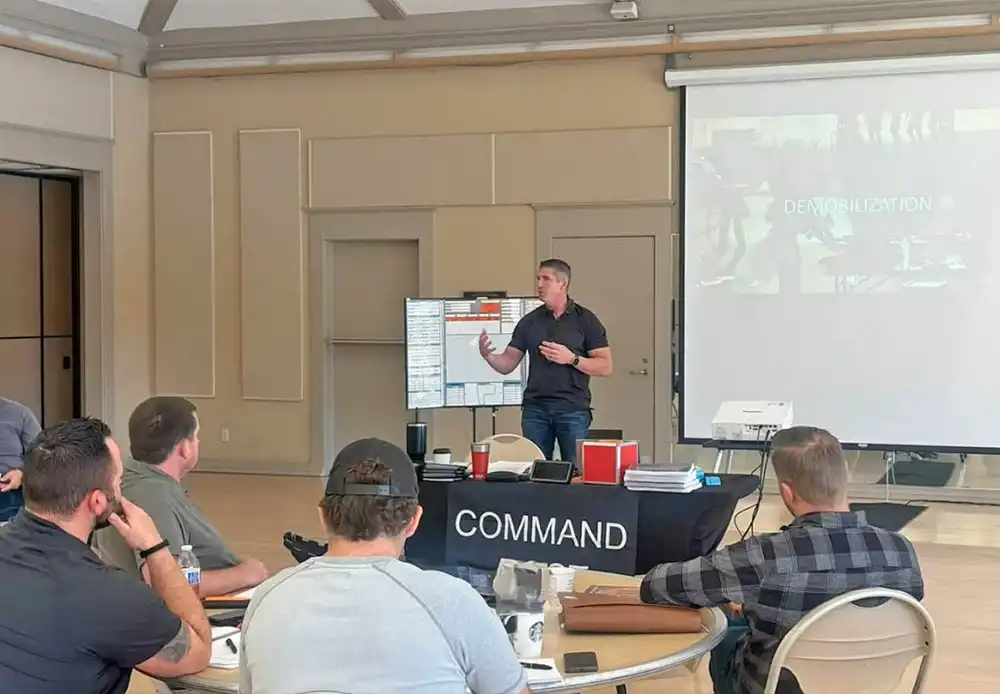
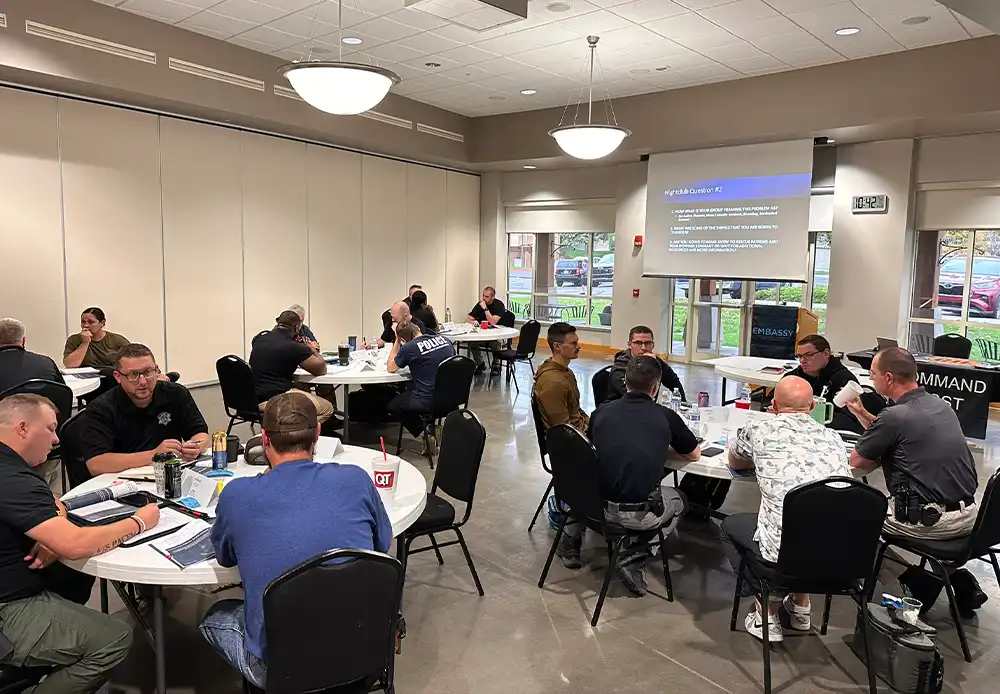
That’s why CIM 360° is built on differential learning — video-based scenarios, audio, and small-group problem-solving that research links to far stronger retention than a slideshow ever could. Students don’t watch the material; they work through it.
One course, two fronts
The “360°” is the point. This 24-hour course prepares leaders of every rank for the full arc of a critical incident — both the chaos of the response and the complex, often-overlooked responsibilities that follow.
A system you carry out the door
What sets CIM 360° apart is that leaders leave with more than notes. Every participant is issued a Critical Incident Response Guide — a field resource built for active shooter and killer events, barricades, hostage situations, natural disasters, officer-involved shootings, missing persons, protests and riots, search warrants, major crime scenes, and establishing perimeters with K9 and SWAT. It includes resource lists, intelligence templates, suspect, location, and vehicle information sheets, and fill-in organizational charts designed to simplify complex operations under stress. It’s made to live in a command post or an equipment bag — ready the next time the call comes.
The result is what Toby set out to build: not a seminar, but a mindset, a structure, and a system leaders can apply the moment a critical incident hits their city, county, or state.
Learn more about Capt. Toby Darby (Ret.) or browse the full Embassy Course Library.
